Source Adjustable Telescopic Tv Wall Mount for Home, Office, Retail
Find 30 adjustable telescopic tv wall mount options with varying tilt, swivel, and load capacities. Compare specs for 13-60 inch screens and request quotes from verified manufacturers. These mounts support VESA 200x200 to 400x400mm standards and offer cable management features for clean installations in diverse environments.
Key considerations
Products List


$6.40 - $6.98
Moq: 100


$2.80 - $3.20
Moq: 100


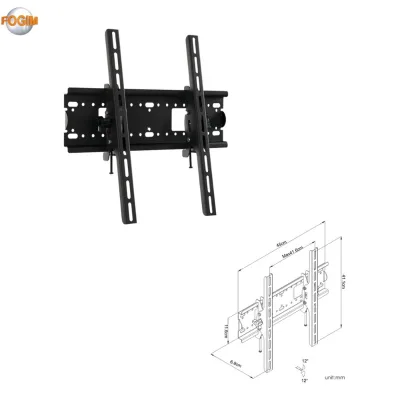


Comprehensive Sourcing Guide
Adjustable Telescopic TV Wall Mount Sourcing Guide
The adjustable telescopic TV wall mount category encompasses versatile mounting solutions designed to accommodate various screen sizes and viewing angles. Based on observed market data, these units typically support VESA patterns up to 400x400mm and are engineered for screens ranging from 13 to 60 inches. Buyers should note that specific models like the CT-LCD-T521NC offer a tilt range of +2 to -10 degrees, while full-motion variants such as the CT-LCD-L03MV provide a wider tilt of +5 to -15 degrees.
Procurement decisions must account for the significant variation in load capacities and extension ranges found across different listings. While some units support up to 35kg with a telescopic reach of 65-395mm, others are rated for 30kg or even 18kg with shorter extension profiles. Sourcing teams must verify that the selected model matches the specific weight of the intended display and the required viewing distance to ensure structural integrity and safety during installation.
Product Scope and Observed Listing Signals
Market listings reveal a diverse range of styles, from classic rack designs to full-motion articulating arms that allow for 180-degree swiveling. The observed product attributes indicate that customization is available for many units, allowing buyers to tailor features like cable management systems or specific packing configurations. Some models include color boxes or brown boxes, while others utilize specialized packaging dimensions like 68x68x20cm, which impacts logistics planning and storage requirements.
Buyers must carefully distinguish between general TV mounts and specialized medical-grade units, as the data includes products intended for applications like anesthesia machines and hanging towers. These specialized items often feature anti-static properties and come with different accessories, distinguishing them from standard consumer electronics mounts. Understanding this distinction is critical to avoid purchasing a consumer-grade mount for a medical environment or vice versa, ensuring the product meets the specific operational needs of the facility.
Technical Specifications to Verify
Verification of the maximum VESA pattern and recommended screen size is the first critical step in the technical evaluation process. The data shows a clear split between mounts supporting 200x200mm patterns for smaller screens up to 42 inches and those supporting 400x400mm for larger displays up to 60 inches. Procurement teams must cross-reference the specific model number, such as CT-LCD-T3201X or CT-PLB-E801G, against the actual VESA holes on the television to prevent compatibility issues that could lead to installation failure.
The mechanical range of motion and extension capabilities require precise measurement against the intended room layout. Units like the CT-LCD-L03MV offer a TV-to-wall distance of 65-395mm, whereas other models may only extend 53-497mm with different tilt limits. Buyers should confirm the level adjustment capabilities, which can range from +/-3 degrees, to ensure the mount can be perfectly leveled on uneven walls. Additionally, the material composition, such as aluminum alloy, should be verified to ensure durability and resistance to corrosion over time.
Compliance and Safety Documentation
Safety compliance is paramount when selecting a wall mount, particularly for heavy loads or high-traffic areas. The available data indicates that certain models carry CE certification, which is a standard requirement for products entering the European market. Buyers must request valid certification documents for every batch purchased to ensure the product meets the necessary safety standards for load-bearing structures. Relying on general claims without physical documentation can expose the organization to liability in the event of a mounting failure.
Beyond certification, the structural integrity of the mount must be validated against the specific loading capacity of the unit. Observed load capacities vary significantly, with some units rated for 30kg and others for 35kg, while specialized medical mounts may have different constraints. Procurement teams should verify that the stated load capacity includes a safety margin above the actual weight of the television. This verification process ensures that the mount will not fail under dynamic loads, such as accidental bumps or vibrations, which are common in commercial and residential settings.
Cost Drivers and Commercial Terms
The cost of adjustable telescopic TV wall mounts is influenced by the complexity of the articulation mechanism and the materials used in construction. Full-motion units with 180-degree swivel capabilities and extended telescopic ranges generally command higher prices than fixed-tilt models. Buyers should analyze the price range observed in the market, which spans from 0.5 to 312 USD, to understand the correlation between feature sets and cost. This analysis helps in budgeting for projects that require specific performance characteristics without overspending on unnecessary features.
Commercial terms, including Minimum Order Quantity (MOQ) and lead times, vary widely across different suppliers and product lines. The observed MOQ range spans from 1 to 2000 units, offering flexibility for both small-scale retail purchases and large institutional deployments. Sourcing teams must negotiate terms that align with their inventory strategy, considering that some models may require longer lead times due to customization options or specific packaging requirements. Understanding these commercial variables is essential for maintaining a stable supply chain and avoiding production delays.
Supplier Qualification and Quality Control
Supplier qualification should focus on the origin and manufacturing capabilities of the provider, as the data indicates products originate from regions like Zhejiang, China. Buyers must verify that the supplier has a proven track record in producing mounts that meet the specified technical standards and load capacities. It is advisable to request samples for physical inspection to confirm the quality of materials, such as aluminum alloy, and the precision of the VESA hole alignment before committing to a large order.
Quality control processes must be established to ensure consistency across all units in a shipment. Given the variation in product models and specifications, a robust inspection protocol is necessary to catch defects in the tilt mechanisms, swivel joints, or cable management systems. Buyers should require a pre-shipment inspection report that details the results of load testing and dimensional checks. This proactive approach minimizes the risk of receiving substandard products that could compromise the safety of the installation or the reputation of the buyer.
Long-Term Procurement Checks
Long-term procurement success depends on the availability of replacement parts and the durability of the mount over time. Buyers should assess the supplier's ability to provide spare components, such as screws, brackets, or adjustment mechanisms, to extend the lifecycle of the installation. The data suggests that some models include cable management systems, which should be checked for wear and tear after extended use to ensure they remain functional and do not become a tripping hazard.
Regular audits of the installed mounts are necessary to verify that they continue to meet safety standards and performance expectations. Over time, the tension in the tilt and swivel mechanisms may degrade, requiring maintenance or replacement. Procurement teams should establish a schedule for inspecting the mounts, checking for loose bolts, corrosion, or structural fatigue. This ongoing maintenance strategy ensures that the investment remains safe and functional, protecting both the equipment and the people in the vicinity from potential accidents.
FAQs
What is the maximum VESA mounting pattern supported?
The maximum VESA mounting pattern supported is 400x400mm for specific models. Other variants support 200x200mm patterns. This ensures compatibility with a wide range of television sizes and mounting standards available in the current product catalog.
How much weight can the adjustable telescopic mount hold?
The loading capacity varies by model, ranging from 18kg to 35kg. Some units support up to 30kg or 66lbs, while others handle 25kg. Buyers should verify the specific model's maximum loading weight before purchasing to ensure safety.
Which screen sizes are recommended for this mount type?
Recommended screen sizes range from 13 inches up to 60 inches depending on the model. Specific recommendations include 26 to 55 inches, 32 to 57 inches, and 17 to 42 inches. Always check the model specifications for exact size compatibility.
Can the mount be customized for specific needs?
Yes, customization is available for these adjustable telescopic tv wall mounts. Buyers can request specific configurations to meet unique requirements. This flexibility allows for tailored solutions while maintaining the core functionality of the classic series rack designs.
What is the tilt range for the full motion mount?
The tilt range varies by model, with some offering +2 to -10 degrees and others +5 to -15 degrees. Certain units provide a wider range of +15 to -15 degrees. This adjustability helps optimize viewing angles for different room layouts.
How far does the mount extend from the wall?
The distance from the wall ranges from 53mm to 497mm for standard models. Full motion variants extend between 65mm and 395mm. This telescopic feature allows users to pull the television out for better viewing or push it back for a sleek look.
Are certifications like CE available for these products?
Yes, certain models come with CE certification to ensure compliance with safety standards. This certification is explicitly listed for specific product models in the catalog. Buyers seeking certified equipment should verify the certification status for the exact model they intend to purchase.